
|
Women Lobbyists'
influence is growing

Little by
little, women are getting in on some of the really big deals --
and some of the dirty ones, too.
by
Barbara Ash - Democrat staff writer
When it comes to lobbying, women play
the game just as hard as the men. But it's the men who run the
high-stakes tables.
If you need someone to steer a
pro-business amendment through a reluctant committee, Jodi Chase
is among the toughest. But if you need a last-minute favor from
House Speaker Bo Johnson, call her boss at Associated Industries
of Florida, Jon Shebel.
Women lobbyists acknowledge that even
among the top women in their field, you won't find one who's
attained the rank of "super lobbyist". That title is held by men
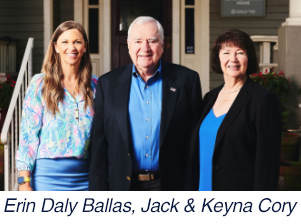
like Shebel, John French, Guy Spearman, Ron Book and Jack Cory.
They command six-figure fees from clients such as Anheuser-Busch,
Phillip Morris and Alamo Rent-A-Car.
But Capitol insiders insist it's
changing. They say that especially in the past eight years, women
like Chase, Martha Barnett, Sandi Walters, Mary Ann Stiles,
Keyna Cory and Amy Young have made noticeable cracks in the
glass ceiling. Individually, they represent such clients as IBM,
the Florida Bar Association and AIF.
"Our time is coming," said Chase,
who's been fighting for the governor's health-care reform package
and against a bill that pits insurance companies against trial
lawyers, one of the nastiest battles this session.
"These days," she said, "it seems you
can't make a deal on a big bill without at least one woman
involved. We're getting in on all the big ones -- and the dirty
ones."
Women have now been around long
enough to have built relationships. But what's made the big
difference for them is what's made a difference for men: money.
Women are now advising clients on
where to spend major campaign dollars. And like other successful
lobbyists, they've begun to raise money for candidates from both
parties.
Still, women are aware that the
perception -- women still need help from men -- is the reality.
Take, for instance, a strategy
meeting in early March at which lobbyists were working on the bill
that pitted business against the formidable Florida Academy of
Trial Lawyers.
A woman lobbyist recounted what
happened when the trial lawyers offered to explain their position.
"We contemplated having them come
over," she said. "Then we looked around the room and saw that
there were mostly women present (Another woman lobbyist) said: 'No
offense, but if we're going to do that, we're going to have to
have a few more men in here.' The clear implication was that we
needed the heavy-hitters, our bosses."
In the end, they decided they didn't
need the meeting.
Early friendships ensured future
access for men
For lobbyists, access to power is the
difference between success and failure. In an industry where
access comes with the length of friendships and the depth of
clients' pockets, women still pay the price for getting in the
game late.
Until the last decade, there were
only a handful of women lobbyists. Most of them represented "soft
cuases." Now, they're getting in to big-league hard-ball: AIF,
IBM, the Florida Greyhound Association.
Still, women never have enjoyed the
same networking opportunities that men have.
Guy Spearman of Cocoa started his career as an
aide to then-Gov. Reubin Askew 25 years ago, and go to know Bo
Johnson when the House Speaker was an aide to then-U.S. Sen.
Lawton Chiles. Tallahassee attorney John French began his career
as a legislative staffer in the late '60s and another protégé of
Askew.
Over the years, male lobbyists have
frequently cemented friendships with lawmakers with lavish gifts,
and all-expense-paid hunting and fishing trips and Super Bowl
junkets. Today, they're reaping the benefits of longstanding
friendships. Those friends who were freshmen legislators 10-12
years ago are now legislative leaders.
But the women pioneers are starting
to catch up.
Holland & Knight attorney Martha
Barnett, who represents IBM and the Phosphate Council, and AIF's
Mary Ann Stiles, also an attorney, were the only women
representing business in the '70s. They remember having to fight
hard for recognition and respect.
Amy Young recalls those days well.
When she started lobbying on pre-natal care in 1982, legislators
would listen to her.
But when she approached them for
Martin-Marietta, "they thought the information I was giving them
couldn't possible be reliable," she said.
Women who fought for social issues
had trouble just getting in a legislator's door. Nikki Beare
recalls how she sat for hours watching men file in and out, while
she waited to explain the Equal Rights Amendment.
"Years ago, men wouldn't pay
attention to women," said Gayle Andrews, who covered the
Legislature and Florida politics for WCTV from 1973-89. "They
fought the ERA like crazy. You know if they did that, they weren't
going to take women seriously."
"Women had to struggle to get men to pay attention to their
issues, because they were too busy looking at their bodies," said
Andrews, who now owns a media consultant company.
Intense sessions take toll on normal
lives
Sandi Walters has seen a lot of women lobbyists come and go during
the 14 years since she became the first woman to open her own
firm.
"When you sign on to be a lobbyist, your life is consumed for that
two-month period," the annual legislative session, she said. "A
lot of women don't last because of the stress. Competition is
fierce, and they feel like they're fighting the battle alone.
Because they're female, they think they have to fight harder and
be better."
Even Chase, who's proud of the nicknames her colleagues have stuck
on her -- "In-Your-Face-Chase" and "Attila the Honey" -- admits
lobbying is the kind of job that requires nerves of steel and
thick skin.
"Two times this session I had bills I had to argue against the
attorney general in the judiciary committee," she said. "Here's
this man who everybody respects standing there, and I had to look
him in the eye and tell him he was wrong. That's a pretty scary
thing, but if I stopped to think about it, I'd be too afraid to do
it."
But Chase the tiger is also Chase the mother. Three years ago, she
went into labor on the fourth floor of the Rotunda with her second
child, Adam. She rarely sees him, or his 5-year-old sister,
Jackie, during the week.
"This business is real hard on families," said Chase, over coffee
in the Capitol's snack bar, where she waited for a draft of the
health-care reform bill and took calls on her tiny cellular phone.
Sometimes she feels guilty about the toll the job takes on her
family.
"But, I'm also proud of what I do," she said. "I think my children
will have great role models, because they have parents who support
and help each other, and a mother who doesn't let the world take
control of her."
Women explain the power of politics
Women lobbyists are learning to take control of the legislative
world with campaign contributions. They've always recognized the
value of deep pockets -- especially during the frenzied final
weeks of a session. But until recently, they haven't had a say in
how the money is spent.
"Women are just now starting to get the big clients who contribute
to campaigns, and that's made a definite difference," said
Walters, sitting on a bench in the Rotunda, where she traded quips
with former House Speaker Don Tucker, now a lobbyist.
Her client list includes the Florida Bar, and Florida Association
of Criminal Defense Lawyers, which doesn't make political
contributions.
Amy Young is luckier. Her clients, including Ashland Oil, Kraft
General Foods and the Florida Medical Association, rely on her to
tell them which legislators they should back. It makes a
difference when you influence the purse strings.
"Raising money is a way of making sure people who get elected
support your issues. And early money is most important -- and
longest remembered. It helps with friendships," said Young, a top
money-maker for Chiles' 1990 campaign. She's already compiling a
list of candidates to put her clients' money on this summer.
Competition among lobbyists for the big clients who have the big
bucks is fierce, says super lobbyist and lawyer French, who
represents Philip Morris, Burger King, Florida Power & Light, and
the Florida League of Hospitals.
"If a Fortune 500 client has a big issue and a lot at stake, they
want to go with a known entity," he said. In most cases, that's
been men.
But the good news, says French, is that women are getting more
exposure since the emergence of team lobbying.
Clients discovered, he says, that it's impossible for a lone
lobbyist to have a rapport with all members of the legislature,
that it's better to build a diverse team. The result has been more
women and minorities in the arena.
"Now," said French, "the Amy Youngs and Jodi Chases have the
opportunity to walk the walk and show clients that they can play
at first-team levels.
"Women who stick around will reap the benefits of the contacts
they're making now. You'll see women on the super-lobbyist list in
the next five years. It's inevitable." |